Oil-immersed vs dry-type transformers: how to choose for your site
Installation location, fire rules, losses, maintenance and price — the five factors that decide between an oil-immersed and a cast-resin dry-type transformer.
By Xinya Power editorial team
Most distribution projects end up choosing between a sealed oil-immersed transformer and a cast-resin dry-type transformer. Both are proven technologies; the right one depends on where the unit will stand.
1. Where will it be installed?
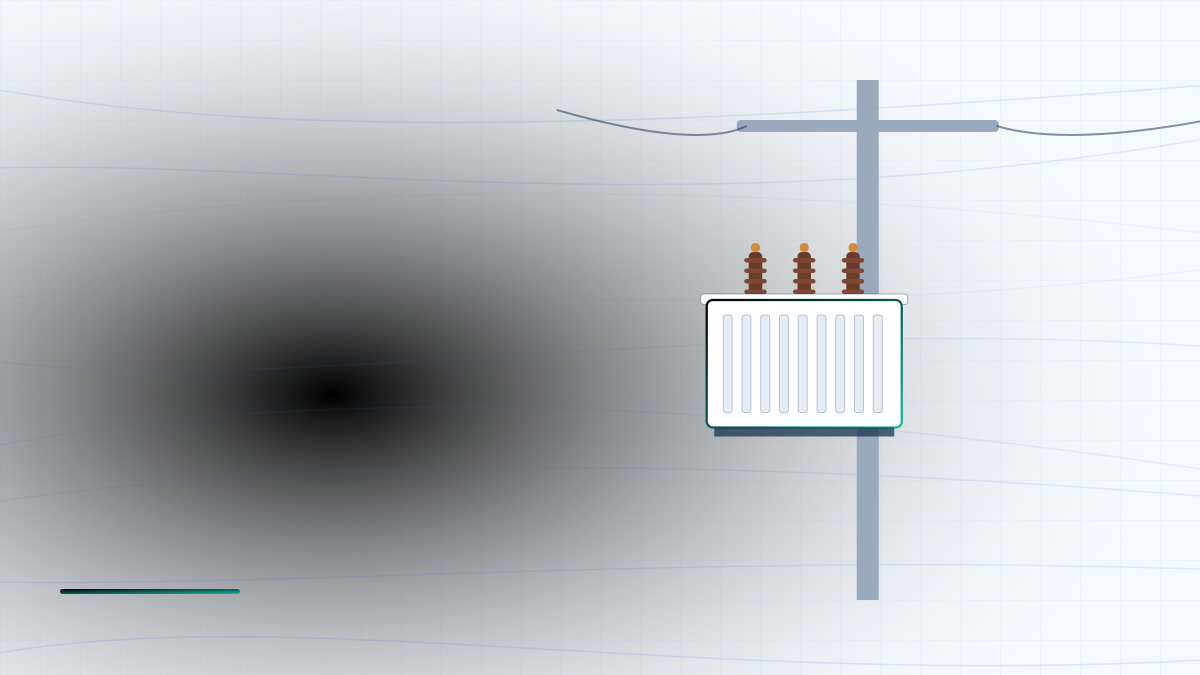
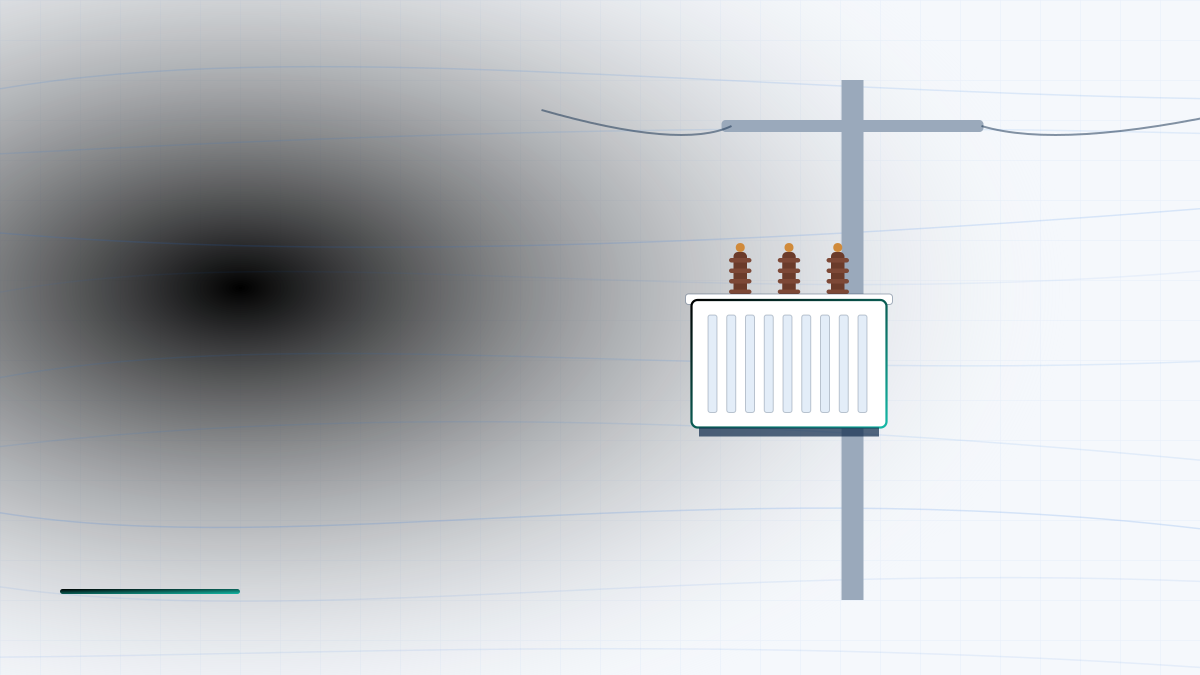
Outdoor yards, pole or pad mounting and prefabricated substations favour oil-immersed units: the steel tank is weatherproof and oil is an excellent coolant. Indoor electrical rooms, basements, high-rise buildings, hospitals and metro stations favour dry-type units, because there is no oil to leak or burn.
2. What do the fire rules say?
Many building codes require oil containment pits, fire walls or sprinklers for indoor oil transformers. Cast-resin transformers are self-extinguishing and usually avoid those costs — often enough to offset their higher purchase price.
3. Losses and efficiency
Compare no-load loss (paid every hour the unit is energised) and load loss (paid in proportion to the load squared) at the same reference temperature. For a 1,000 kVA unit, an S13 oil transformer has a no-load loss of about 830 W, an SCB13 dry type about 1,270 W; amorphous-core versions of both cut no-load loss by roughly 70%.
4. Maintenance and environment
Sealed oil transformers need periodic oil checks and, eventually, oil disposal. Dry types need only cleaning and connection checks, but must be kept dry and ventilated — specify IP23 enclosures and fans where the room is warm.
5. Price and size
Per kVA, oil-immersed units are cheaper and more compact for the same rating; dry types cost more but save civil works indoors.
Quick rule
- Outdoor, rural, lowest cost per kVA → oil-immersed S13 or amorphous
- Indoor, public buildings, strict fire rules → cast-resin dry type SCB13 or SCBH15
Not sure? Send us the load, voltages and installation drawing — our engineers will recommend a type, rating and enclosure within one working day.